How to Choose an Electric Street Sweeper: Sizing by Area, Debris and Shift
Ride-on sweeper, vacuum sweeper or walk-behind scrubber? Size an electric cleaning machine by area per hour, debris type, surface and battery runtime.
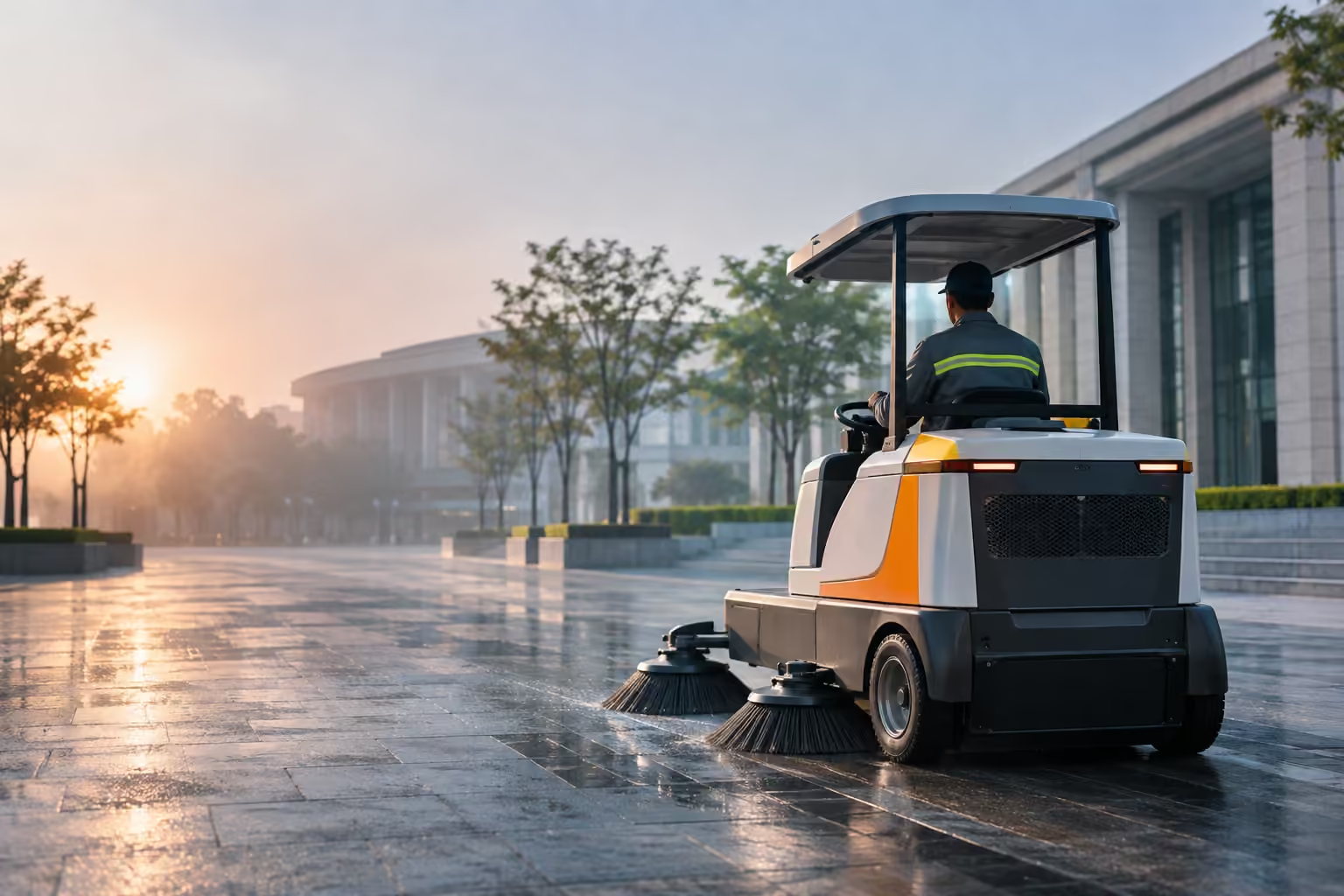
Short answer: Size an electric sweeper by dividing the area to clean per shift by the machine's real productivity (roughly 60–70% of its theoretical m²/h), then check that battery runtime covers the shift. Use walk-behind scrubbers for indoor hard floors, ride-on brush sweepers for plazas and yards, and vacuum sweepers for fine dust and roadside litter.
Electric sweepers are quiet enough for night shifts, emission-free for indoor use and cheap to run. The hard part is choosing the right size. Buy too small and crews fall behind; buy too big and the machine will not fit through gates or between parked cars.
The three machine types
- Walk-behind scrubbers such as our 19 kg hand-push scrubber wash and dry hard floors in shops, kitchens, hospitals and warehouses.
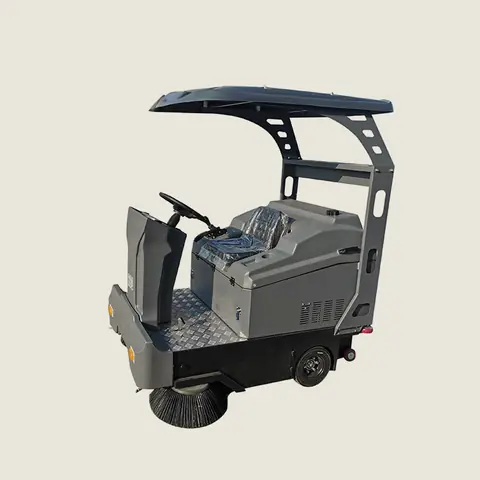
- Ride-on brush sweepers such as the 1,400 mm ride-on sweeper collect leaves, sand and litter on plazas, factory yards and car parks.
- Vacuum road sweepers such as the 1,800 mm vacuum sweeper add suction for fine dust along kerbs and roads.
Sizing formula
Manufacturers quote theoretical productivity: cleaning width × travel speed. Real productivity is lower because of turns, overlaps and emptying the hopper. A practical rule is 60–70% of the theoretical figure.
machines needed = area per shift ÷ (theoretical m²/h × 0.65 × hours per shift)
| Machine | Cleaning width | Theoretical output | Runtime |
|---|---|---|---|
| Hand-push scrubber (36V) | — | up to 1,800 m²/h | ~70 min |
| 48V multi-brush ride-on | 1,400 mm | 8,500 m²/h | 3–4 h |
| Ride-on road sweeper | 1,400 mm | 9,000 m²/h | 3–5 h |
| Ride-on vacuum sweeper | 1,800 mm | 14,000 m²/h | 5–8 h |
Worked example
A 40,000 m² industrial park is swept once per 6-hour night shift. With a vacuum sweeper: 14,000 × 0.65 × 6 ≈ 54,600 m² per shift — one machine covers it with headroom. With the 48V ride-on: 8,500 × 0.65 × 6 ≈ 33,150 m² — not quite enough, so either add a second unit or a spare battery.
Pre-purchase checklist
- Narrowest gate or aisle the machine must pass.
- Steepest ramp — check the rated climbing grade.
- Debris type: leaves and sand (brushes) or fine dust (vacuum and filter).
- Charging location and overnight power supply.
- Hopper size versus distance to the dumping point.
Frequently asked questions
How long does an electric sweeper battery last per charge?
From about 70 minutes on a compact walk-behind scrubber to 5–8 hours on a ride-on vacuum sweeper, depending on battery size and brush load.
Can an electric sweeper climb ramps?
Yes. Our ride-on sweepers are rated for grades of 25% or more; check the rating against your steepest ramp.
Do electric sweepers work in the rain?
Ride-on sweepers can operate on wet surfaces, but vacuum filters clog faster with wet debris. Schedule vacuum sweeping for dry periods where possible.
Have a project in mind?
Send us your requirements and get a configured quotation.